
Hospital Inventory Management That Delivers 5-7x ROI
Stop chasing supplies. Start transforming patient care. BlueBin’s proven Kanban methodology sustains 98% fill rate while reducing inventory costs by 15%.

Trusted by 550+ Healthcare Facilities | 2.6M+ Bins Managed Daily |
98% Customer Retention
Why Traditional Hospital Inventory Management Fails
Hospital inventory management continues to plague healthcare organizations, leading to stockouts, expirations, and wasted nursing time. The problem isn’t a lack of effort; it’s the broken systems hospitals are forced to use.
Your nurses spend 60 minutes per shift hunting for supplies. That’s $14 billion in clinician productivity lost annually across U.S. hospitals. Meanwhile, you’re carrying $5.8 million in excess inventory to buffer against unreliable replenishment, and still experiencing stockouts 2-10% of the time.
Traditional approaches to healthcare supply chain management, whether manual PAR sheets, automated dispensing cabinets, or basic ERP systems, all share the same fatal flaw: they require clinical staff to manage supplies instead of caring for patients. The harder you try to optimize within these systems, the more you burden the people who can least afford it.
Read our blog post on
The Hidden Costs of Healthcare Supply Chain Waste
How BlueBin Hospital Inventory Management Works
BlueBin transforms hospital inventory management from a clinical burden into a visual, self-managing system that works FOR clinicians, not TO them.
Our Two-Bin Kanban Methodology

Instead of asking nurses to count, scan, or requisition supplies, we implement a simple visual replenishment system based on Lean manufacturing principles that have proven effective in industries demanding zero defects.
Here’s how it works:
Each supply item has two bins. When the front bin empties, clinical staff pull the backup bin forward and place the empty bin in a designated location. That’s it. No forms, no scanning, no counting.
Our dedicated BlueBin implementation team handles everything else: daily rounds, inventory replenishment, quality control, and continuous improvement. You get a guaranteed 98% fill rate without adding any burden to clinical staff.
What Makes This Different from PAR Level Systems?
Traditional PAR systems fail because they require constant counting and adjustment. BlueBin’s visual Kanban system eliminates the need for counting entirely. The empty bin IS the signal. The system is self-regulating and self-correcting, requiring minimal clinical involvement.
The Complete Transformation Package
BlueBin hospital inventory management includes:
 =
=
Turnkey Implementation
Dedicated teams deploy your system in 9-15 months (vs. 3-5 years for traditional lean programs)
 =
=
BlueBin Hardware
Medical-grade racks and bins designed for clinical environments

BlueQ Analytics Platform
Real-time visibility into inventory performance, predictive alerts, and executive dashboards
 =
=
BlueBelt Certification Program
Train your staff on Lean principles and Daily Management Systems

Guaranteed Performance
98% fill rate, <1% expirations, measurable cost savings

A Large Midwest Nonprofit Health System Achieved $12.8M Annual Savings with Hospital Inventory Management Transformation
A large Midwest nonprofit health system, one of the largest in the United States, needed to transform supply chain operations across 12 facilities while maintaining clinical excellence.

The Challenge
- Multi-facility coordination complexity
- $25.7 billion in annual healthcare supply waste
- Nurses spending excessive time managing supplies
- Inconsistent inventory levels across locations
- Need for measurable ROI to justify system-wide investment
The BlueBin Solution
A large Midwest nonprofit health system’s four-team deployment covered a flagship academic medical center, a pediatric hospital, and ten additional community hospitals across the system.
Each facility received:
- Dedicated BlueBin Program Manager
- On-site implementation team
- Complete hardware infrastructure
- BlueQ Analytics platform access
- BlueBelt Program Specialist for ongoing support
The Results

Investment: $6.70 million over 36 months
- Implementation teams: $5.23M
- Hardware (racks, bins, equipment): $1.36M
- BlueQ Analytics: $84K/year

Returns:
- $12.8M annual savings from 3% medical supply expense reduction
- $5.8M one-time inventory reduction (freed working capital)
- $1.9M annual resource redeployment value
- 7.4x ROI in 36 months
I’ve heard many positive comments. It’s more visible and no more logging in and counting how much you are taking. Makes the process faster so we can get back to patient care. The organization is much better.
ReadHealthcare Supply Chain Management Guide
The Complete Hospital Inventory Management System

Two-Bin Kanban Visual Replenishment

The foundation of effective hospital inventory management is visual control. Our two-bin system provides instant visibility: supplies are available (full), running low (single bin), or need immediate attention (empty).
Unlike barcode scanning systems that add clinician burden, our visual system requires zero technology interaction. Clinical staff never count, scan, or requisition. They use supplies and let the system handle replenishment.
Real-Time Inventory Analytics
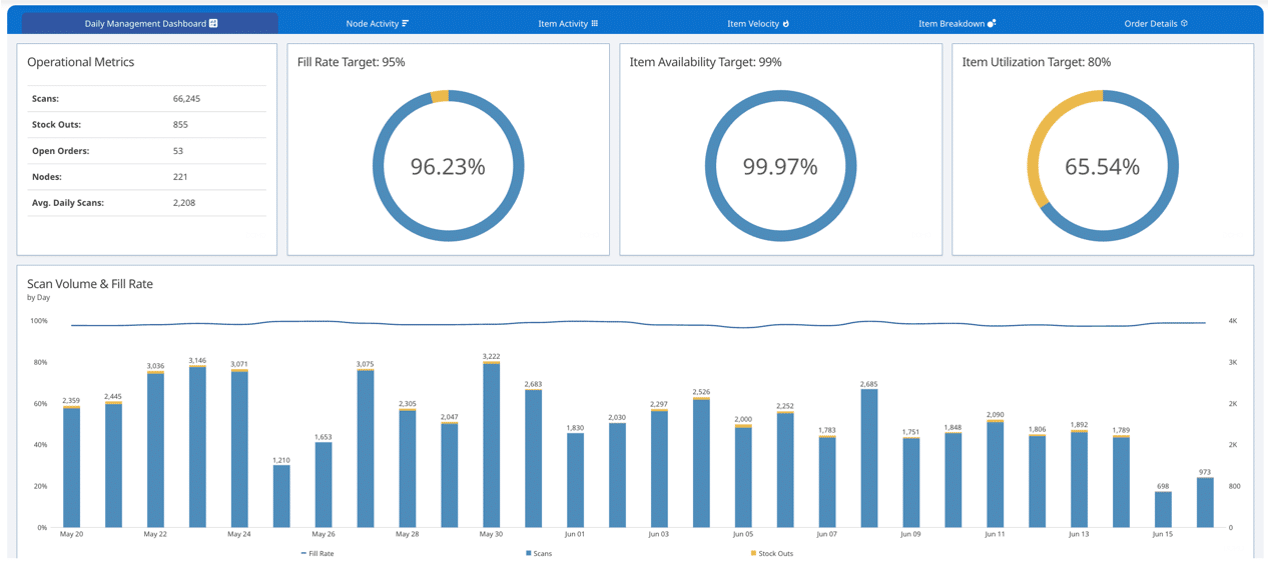
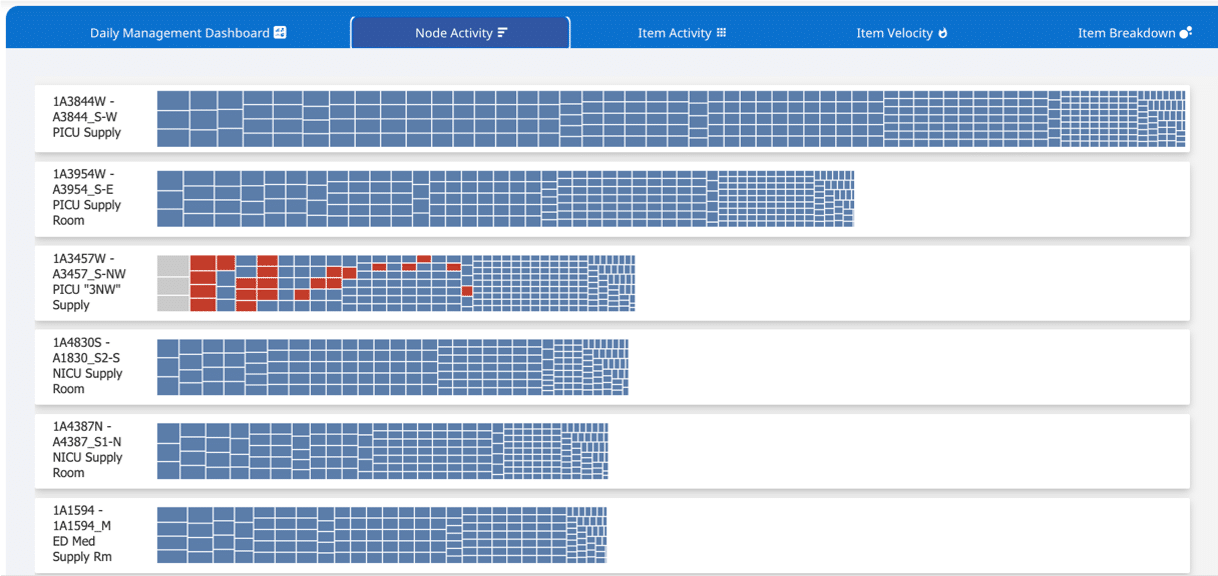
BlueQ Analytics provides executive-level visibility into hospital inventory performance across all facilities. Heat maps identify problem areas before they impact patient care. Predictive alerts warn of potential stockouts 5-7 weeks in advance. Daily Huddle Boards enable same-day issue resolution.
Key analytics capabilities:
- Perpetual inventory visibility (no cycle counting required)
- Expiration tracking and prevention (<1% waste vs. industry 9%)
- Fill rate monitoring (real-time vs. quarterly reviews)
- Cost variance analysis (identify supplier performance issues)
- Supply hunt reduction metrics (clinical time reclamation)

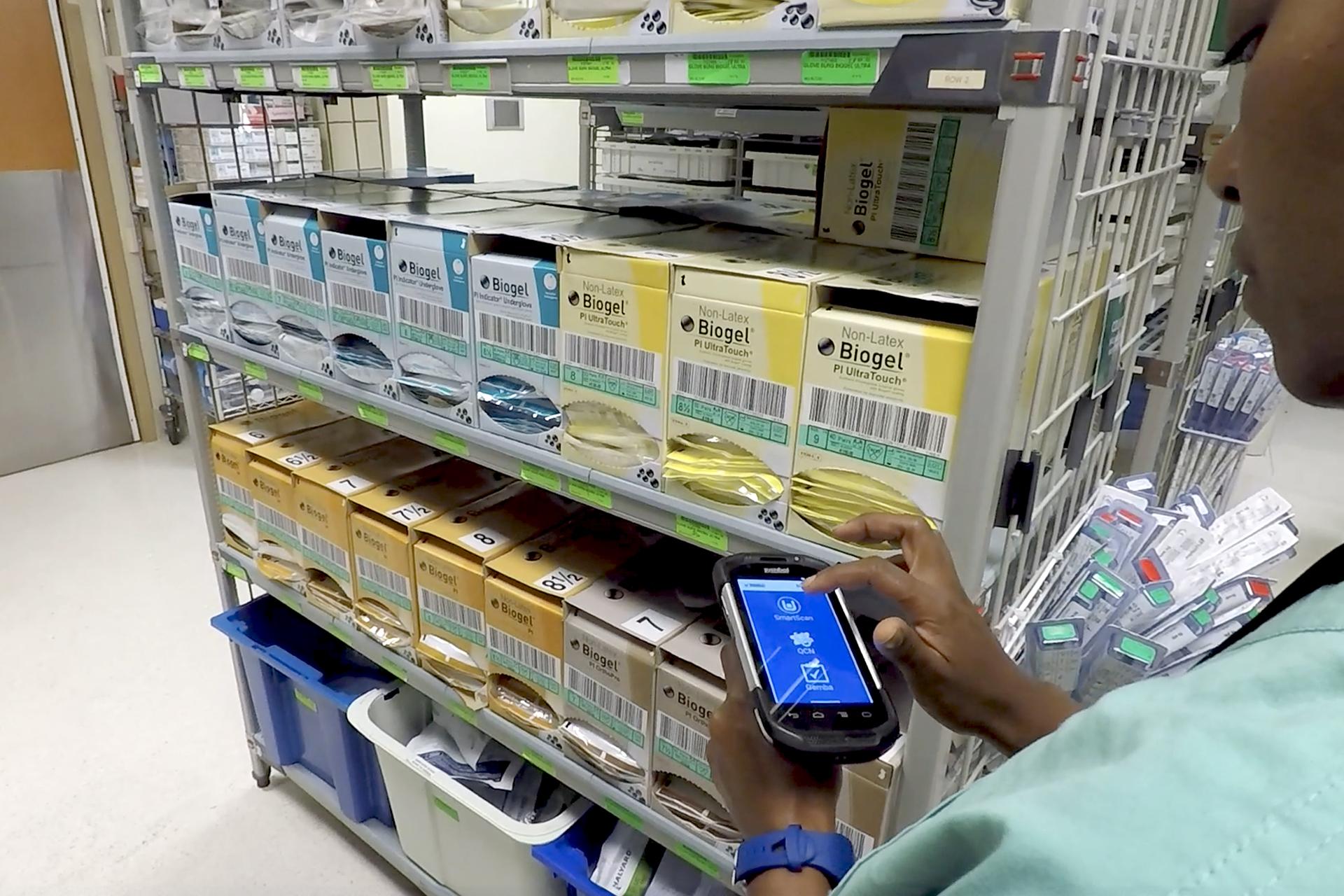
Mobile Supply Replenishment System
Key analytics capabilities:
- Kanban and PAR cart order entry
- PO and non-PO receiving with barcode support
- Warehouse inventory management and cycle counts
- Labor and route time tracking
- Real-time integration with any ERP system
- Proof-of-delivery functionality and reporting

Implementation & Training
Our turnkey implementation approach includes:

Assessment
(Weeks 1-4):
Plan for Every Part (PFEP) analysis, item master optimization, facility walk-throughs

Design
(Weeks 5-8):
PAR level optimization, bin sizing, layout planning, workflow integration
Build
(Weeks 9-12):
Hardware installation, bin labeling, initial stocking, quality assurance

Training
(Weeks 13-15):
Clinical staff orientation, BlueBelt certification, Daily Management System setup

Go-Live
(Week 16):
Dedicated on-site support, performance monitoring, issue resolution

Optimization
(Months 4-9):
Continuous improvement, PAR adjustments, expansion planning

Sustainability
(Months 10-15):
Transition to internal management, ongoing coaching, performance guarantees
Scale
(Ongoing):
System-wide rollout, additional facilities, advanced analytics

Why Healthcare Organizations Choose BlueBin for Hospital Inventory Management

Process First, Technology Second
Most hospital inventory management solutions start with technology: automated dispensing cabinets, RFID tracking, or AI-powered demand forecasting. These tools fail because they automate broken processes.
BlueBin starts with process discipline. We implement proven Lean methodology, establish visual management, and create self-regulating systems. Then—and only then—we layer in technology (BlueQ Analytics) to enhance performance, not to band-aid dysfunction.

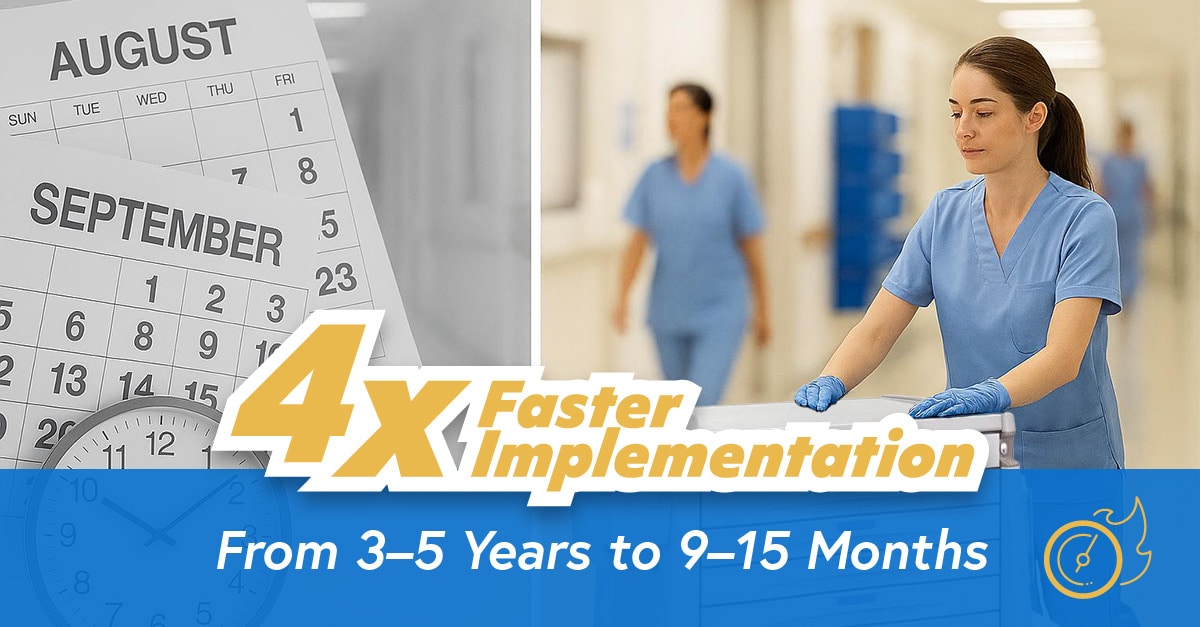
4x Faster Implementation
Traditional hospital Lean transformations take 3-5 years and often stall in year three. BlueBin delivers a complete transformation in 9-15 months through our turnkey implementation approach.
Why the difference? We don’t train your team and hope they execute. We deploy dedicated implementation teams who do the work while simultaneously training your staff. You get results immediately, not after years of internal effort.

Read4x Faster: How BlueBin Delivers Transformation in 9-15 Months
Designed FOR Clinicians, Not TO Them
Automated dispensing cabinets require nurses to log in, navigate menus, and account for every item. This adds 5-10 minutes per supply retrieval.
BlueBin eliminates clinical burden entirely. Nurses open a bin, use supplies, and continue patient care. Our implementation teams handle all replenishment, inventory management, and optimization. Clinical staff experience pure supply availability without any management responsibilities.
Guaranteed Results, Not Best Efforts
Technology vendors sell you a system and wish you luck. BlueBin guarantees measurable outcomes:
- 98% fill rate (supplies available when needed)
- <1% expiration rate (vs. industry average 9%)
- 30% operational efficiency gains (time savings for redeployment)
- Measurable cost savings (typically 7% supply expense reduction)

Frequently Asked Questions About Hospital Inventory Management
How does hospital inventory management with Kanban differ from PAR level systems?
Traditional PAR systems require constant counting and manual replenishment. Staff must physically count each item, compare to PAR levels, and submit requisitions. This is time-consuming, error-prone, and burdens clinical staff.
BlueBin's Kanban system is visual and self-regulating. The empty bin IS the signal. No counting required. Our implementation teams handle all replenishment based on this simple visual trigger, achieving 98% fill rate without clinical burden.
What size hospital benefits most from BlueBin inventory management?
BlueBin serves healthcare facilities from 50-bed community hospitals to large academic medical centers with 1,300+ beds. The methodology scales effectively because it's based on Lean principles proven across industries.
Small hospitals appreciate our turnkey approach—you don't need a large supply chain team to succeed. Large health systems value our phased implementation methodology, which delivers system-wide transformation (as in a large Midwest nonprofit health system's 12-facility rollout, achieving 7.4x ROI).
How long does hospital inventory management implementation take?
A complete facility transformation typically takes 9-15 months, including all phases from assessment through sustainability. This is 4x faster than traditional hospital Lean programs that take 3-5 years.
For multi-facility health systems, we deploy multiple implementation teams simultaneously. A large Midwest nonprofit health system transformed 12 facilities in 36 months using four parallel teams.
Can BlueBin integrate with our existing hospital ERP system?
Yes. BlueQ Analytics integrates with major hospital ERP platforms, including Epic, Cerner, Infor, Lawson, and SAP. Integration is typically completed during the implementation phase and provides bidirectional data flow for perpetual inventory visibility.
However, integration is optional. Many facilities achieve full benefits with BlueBin as a standalone system. The visual Kanban process works independently of ERP complexity.
What ROI can we expect from hospital inventory management transformation?
Typical returns include:
- 3-7% medical supply expense reduction ($12.8M annually for a large Midwest nonprofit health system)
- 15% inventory reduction (one-time working capital release of $5.8M)
- 30% operational efficiency gains in supply chain functions
- Supply hunts virtually eliminated ($14B lost annually across U.S. hospitals)
- Less than 1% expiration rate (vs. industry average 9%)
A Large Midwest nonprofit health system achieved 7.94x ROI in 36 months. We can model a specific ROI for your organization based on your current supply spend, inventory levels, and operational metrics.
How do you sustain 98% fill rate in hospital inventory management?
Our guarantee is backed by four mechanisms:
- Visual Kanban methodology: Immediate visibility when supplies run low, preventing stockouts before they occur
- Daily Management System: Structured daily rounds, huddles, and issue escalation ensure problems are caught and resolved within 24 hours
- Perpetual inventory tracking: BlueQ Analytics provides real-time visibility and predictive alerts 5-7 weeks before potential stockouts
- Dedicated implementation support: Our teams stay on-site until systems are fully established and your staff is certified through the BlueBelt program
Unlike technology solutions that rely on users to "use the system correctly," our process discipline ensures performance regardless of individual behaviors.
What happens to our existing supply chain staff?
BlueBin doesn't eliminate jobs; we redeploy talent to higher-value activities. Facilities typically achieve 30% operational efficiency gains, freeing staff time from manual counting, requisition processing, and emergency supply runs.
Most organizations redeploy this capacity to:
- Strategic sourcing and contract negotiations
- Value analysis and standardization initiatives
- Data analytics and continuous improvement
- Expansion to additional departments or facilities
A large Midwest nonprofit health system valued resource redeployment at $1.9M annually, with clinical and supply chain staff redirected to patient care and strategic initiatives.
Transform Your Hospital Inventory Management in 9-15 Months
Stop accepting stockouts, excessive inventory, and wasted nursing time as “normal” in healthcare. A large Midwest nonprofit health system achieved 7.4x ROI with a sustained 98% fill rate. Einstein Medical Center credits BlueBin as the #1 factor in achieving Magnet status.
Your organization can achieve similar results with our proven turnkey methodology.
Read 7.4x ROI Case Study
Ready To Get Started?
Contact us today to discuss your our 2-Bin Kanban systems for healthcare!